
Psychological Strain From Deferred Choices — Restoring Calm Through Action
Why unresolved decisions quietly exhaust the mind

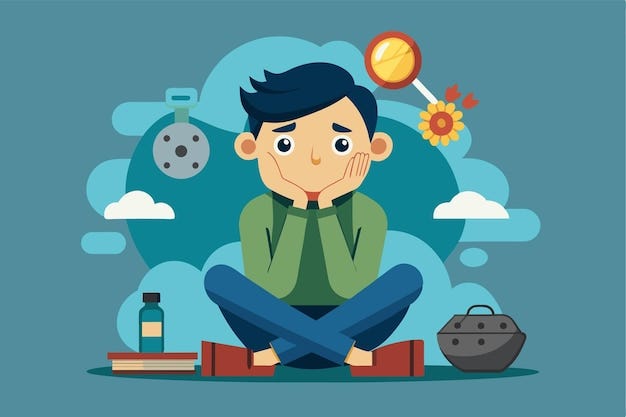
Some stress doesn’t come from what you’re doing.
It comes from what you’re not deciding.
The email you haven’t answered.
The conversation you keep postponing.
The choice you’ve delayed because it feels heavy.
Nothing dramatic is happening, yet your mind feels tense, crowded, unsettled.
That strain has a name.
The Core Insight
Deferred choices create cognitive load.
When a decision is left open, the brain keeps it active:
monitoring it, revisiting it, holding it “just in case.”
This uses mental energy even when you’re resting.
The strain isn’t caused by the difficulty of the decision, it’s caused by the lack of resolution.
What’s Happening Mentally
Unmade decisions engage the brain’s monitoring systems.
They stay tagged as unfinished.
So attention keeps looping back to them.
This leads to:
background tension
reduced focus
irritability without a clear cause
mental fatigue that doesn’t resolve with rest
The mind is waiting for a signal:
Are we moving forward, or not?
Why Waiting Feels Safer — But Isn’t
We often delay choices to avoid discomfort.
But postponement doesn’t remove discomfort, it spreads it out.
Instead of one moment of effort, you experience low-grade stress across many moments.
Action contains strain.
Avoidance distributes it.
The Reframe
You don’t need the perfect decision to restore calm.
You need movement.
A decision.
A boundary.
A next step.
Or even a clear pause with intention.
Any form of closure tells the brain:
This no longer needs constant monitoring.
A Simple Calming Action
Pick one deferred choice today.
Then do one of the following:
decide yes
decide no
schedule a time to decide
write the next small step
Say it clearly to yourself: “This is now handled.”
That sentence matters.
It reduces mental load immediately.
Reflection Question
Which unresolved choice is quietly using more of your mental energy than you realize?